
Why Do My Herbs Taste So Bad?
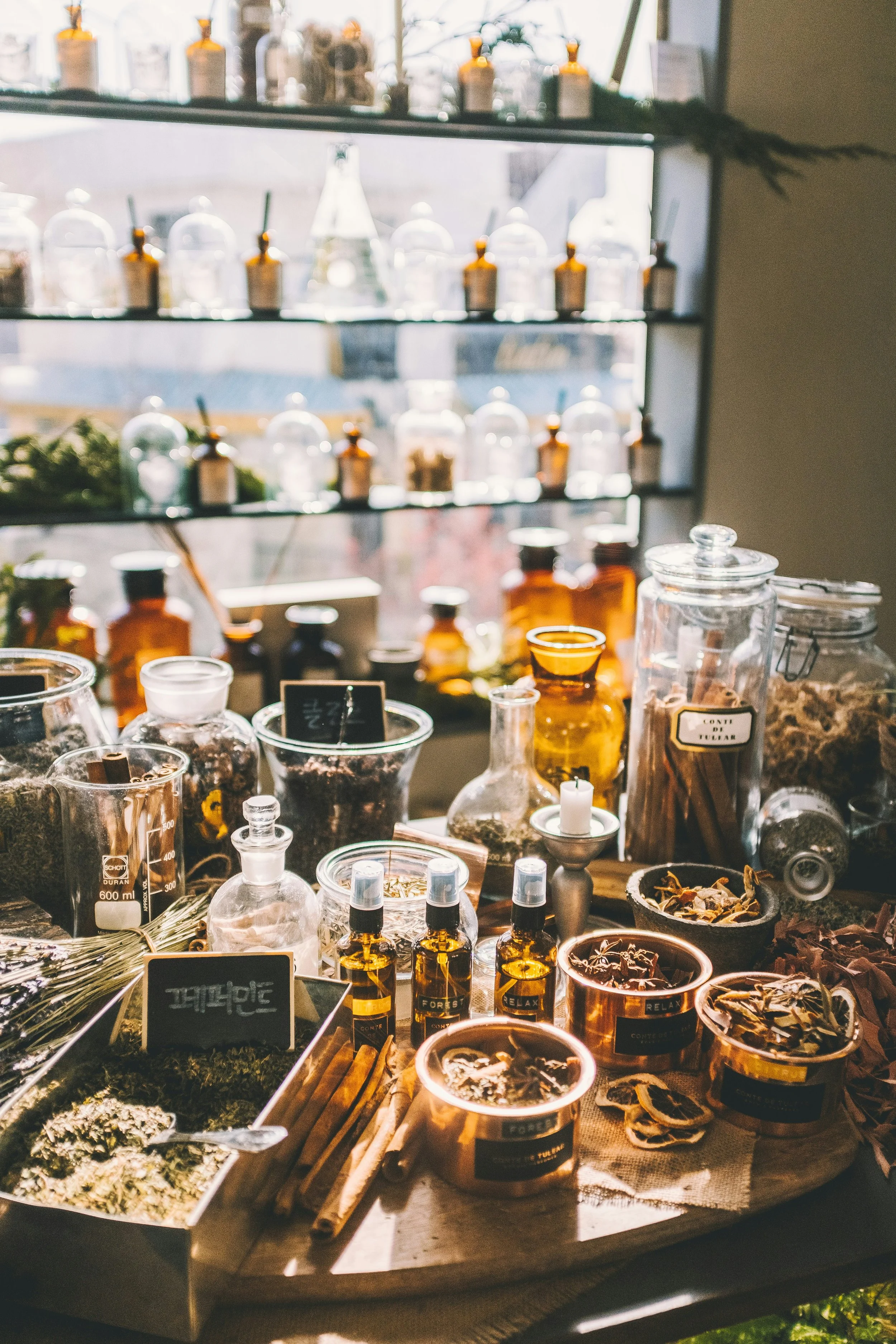
Let's be honest for a moment. You open your bottle of herbs, dissolve them in water, take that first sip, and your whole face rearranges itself without your permission. Maybe you gag a little. Maybe you have to sit down. If you've said some version of "how is this legal" to me in my treatment room, you are not alone, and you are not doing anything wrong. That reaction is basically a rite of passage around here.
But before you start negotiating with me about capsules (we can talk), I want to make a case for the flavor itself — because it's not a design flaw. It's kind of the whole point.
You've Already Acquired a Taste for Medicine
Here's the thing: you already love a bunch of substances that taste intense, bitter, or downright unpleasant on the first try. Coffee is bitter enough to make a toddler cry, and we drink it by the gallon. Red wine is basically astringent tree bark juice, and people pay good money to swirl it around and talk about its "structure." Kombucha tastes like carbonated vinegar with an attitude problem, and it has its own aisle at the grocery store now. Arugula, radicchio, dandelion greens — all bitter enough to make you pucker, all considered a sign of a sophisticated palate.
None of these are accidents of nature that happen to also taste bad. They taste strong because they are strong. Coffee, wine, and bitter greens are all loaded with plant compounds — alkaloids, tannins, terpenes, polyphenols — the same categories of chemical constituents that make herbs medicinal in the first place. Flavor, especially bitterness, is often just your tongue's way of telling you "hey, there's something biologically active in here." The taste isn't separate from the medicine. The taste is your first data point about it.
Chinese herbs are no different. They're just more honest about it than a latte.
Our Palates Have Gotten a Little Soft
I'll also gently point out that most of us are walking around with palates calibrated by a modern diet that leans heavily sweet, salty, and bland. Packaged snacks, sauces, drinks — a huge amount of what we eat is engineered to be inoffensive and craveable at the same time. When your baseline is "smooth and sweet," anything genuinely bitter or pungent is going to hit like a fire alarm.
Our great-grandparents, who ate more bitter greens, fermented foods, and unprocessed everything, would probably shrug at a cup of herbs that makes us clutch our chest. It's not that the herbs got stronger. It's that our flavor world got quieter.
In Chinese Medicine, Taste Isn't a Side Effect — It's the Instructions
This is the part I find genuinely fascinating, and it's something my teachers drilled into me early on: in classical Chinese medicine, flavor isn't just a hurdle between you and feeling better. Flavor is information about what the herb does in your body.
Think about it from your own experience. Suck on a lemon and your mouth puckers and goes dry almost instantly — that sour flavor is physically astringing and contracting tissue. Eat something genuinely spicy and you start sweating and your pores open up — that pungent, acrid flavor is dispersing and moving things outward. Bite into a bitter green and your mouth starts watering in a different way, priming your digestion — bitter flavors stimulate digestive enzymes and bile flow. Your body is already fluent in this language. Chinese medicine just took very careful notes on it for a couple thousand years and built a whole pharmacology around it.
So when I hand you a formula, every flavor in there is doing a job:
The bitter ones — huangqin, dahuang, houpo — are your detox-and-drain crew, clearing heat, drying damp, and moving stagnation. Dahuang especially you'll feel; it's a mover.
Baishao is sour and puckery on purpose — it's astringing and nourishing blood and yin at the same time, softening what's too tight.
Banxia is acrid or pungent — that's it descending rebellious qi and drying phlegm, which not coincidentally is exactly what settles nausea.
Fuzi is warming, almost hot on the tongue — because it's genuinely warming yang. If you feel heat spreading, that's not your imagination.
The sweet, easier ones — dangshen, danggui, fuling, baizhu — are your tonifying, nourishing, harmonizing herbs. Your body likes them because they're actively building you up.
Chaihu rides the line between bitter and acrid, which fits its job of moving things that are stuck between the exterior and interior — it doesn't just do one thing, and neither does its flavor.
None of that is coincidence. The taste is the mechanism, quite literally showing up on your tongue before it shows up anywhere else.
So Next Time, Try This
Instead of white-knuckling your way through your cup, try actually noticing the flavor. Where do you feel it — the back of your throat, your stomach, your whole mouth? Does it make you salivate, sweat, pucker, or warm up? You're not just tolerating a bad taste. You're getting a live readout of the herb doing exactly what it's supposed to do.
That doesn't mean you have to love it right away (or ever, honestly — I still make a face at some formulas myself). But I do think it helps to see the bitterness, the heat, the pucker, as part of the medicine working with you, not against you. You've already trained your palate to love coffee and red wine. Your herbs are asking for a little of that same trust.
What's the most intense-tasting formula you've ever had to choke down? I want to hear about it.