
Mental Health & Trauma
Sometimes there are no words to explain it. Overwhelming panic that makes your heart pound in your chest, thoughts racing around your brain so fast you can’t think straight, deep existential dread that makes it hard to function.
Other times it’s more subtle. You’ve got so many things on your plate, so many people depending on you, that there’s no time to feel the panic or the dread. You’re irritable and exhausted, lashing out at your loved ones, tired all day but unable to sleep. Your life is full on the outside, but empty on the inside.
Yet you keep putting one foot in front of the other. You endure. You don’t have a choice. And when you try to explain it to family and friends they can’t see it. Your suffering becomes invisible to those closest to you.
But it’s not invisible to us. Unfortunately, most of the patients and clients we see are dealing with some level of stress, anxiety, burnout, and trauma. For some, it’s the main reason for their visit. And others come in to balance their hormones, improve their digestion, or relieve body tension – only later realizing the root cause is their mental health.
All three of us, Dr. Elizabeth, Janice, and Lauren, we’ve all been there. We understand. And we’ve all found acupuncture and massage to play a big part in our healing. This is why we do what we do.
Conditions
Anxiety
Depression
Chronic Stress
PMDD
PTSD
Burnout

“Acupuncture has a positive effect on quality of life by reducing PTSD symptoms.”
The Impact of Acupuncture on Health-Related Quality of Life in Veterans with Combat PTSD
Published in Clinical Sciences Forum (2025)
Frequently Asked Questions About Mental Health & Trauma
-
Acupuncture treats anxiety by calming the nervous system, reducing stress hormones, and promoting a more balanced emotional state.
It works by regulating the autonomic nervous system (shifting you out of fight-or-flight), supporting neurotransmitters like serotonin and GABA, and creating a measurable relaxation response in the body. Research in Journal of Endocrinology found acupuncture can “reduce stress hormone levels and modulate the hypothalamic-pituitary-adrenal axis,” while a review in Frontiers in Psychiatry reports it may “significantly improve symptoms of anxiety compared to control conditions.”
Rather than just managing symptoms, acupuncture helps your body relearn how to settle, making it easier to feel grounded and regulated over time.
-
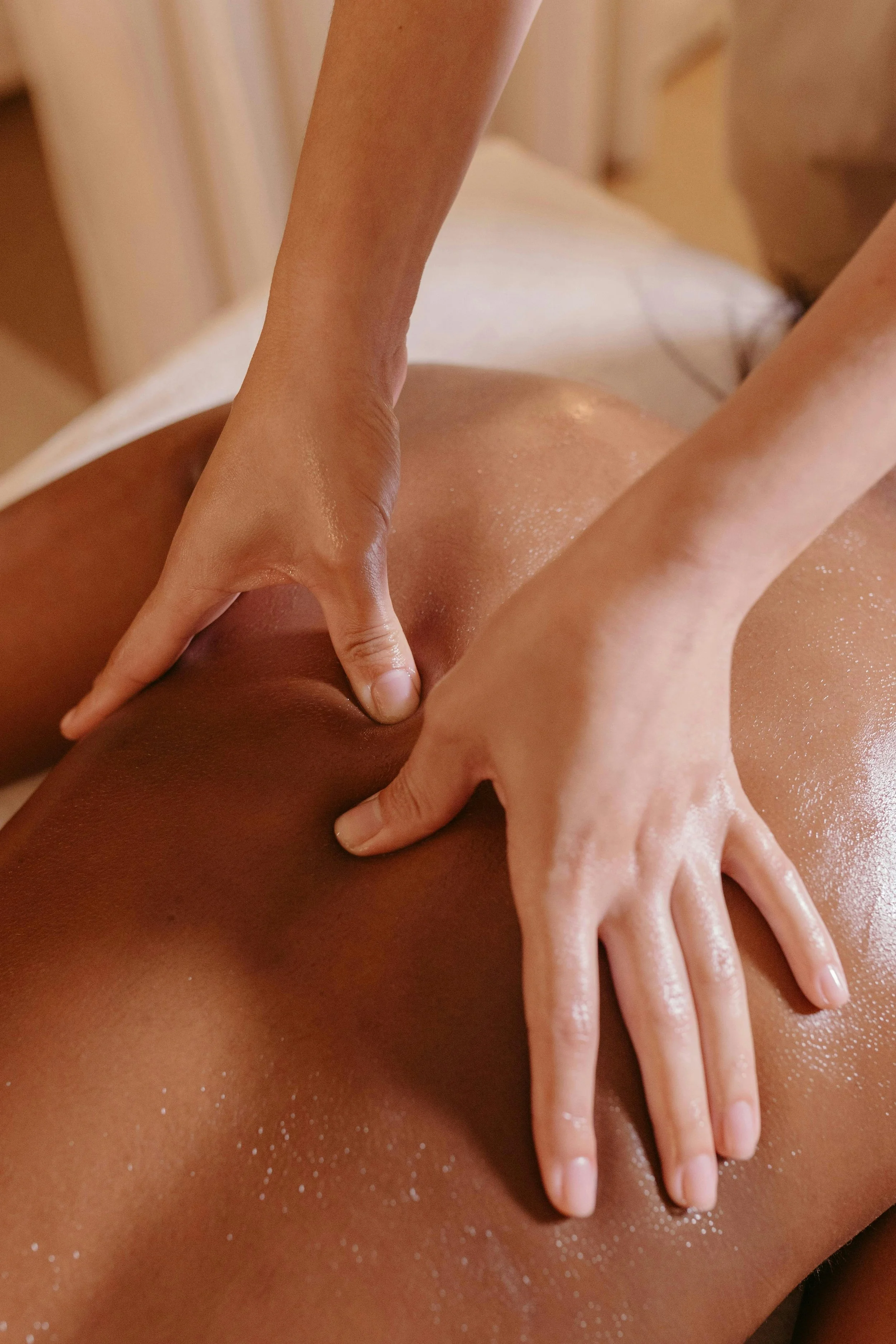
Yes—massage therapy can help support people with PTSD by calming the nervous system, reducing hyperarousal, and improving your sense of safety in the body.
It works by activating the parasympathetic (rest-and-digest) response, lowering cortisol, increasing serotonin and dopamine, and gently reconnecting you with physical sensation in a controlled, supportive way. Research in International Journal of Neuroscience found massage therapy can “reduce anxiety and depression and increase serotonin and dopamine levels,” while findings in Journal of Clinical Psychiatry note that body-based therapies may “reduce PTSD symptom severity and improve emotional regulation.”
When done with a trauma-informed approach, massage becomes a safe, grounding therapy that helps your body gradually come out of survival mode.
-
Acupuncture and Chinese herbal medicine can support your mental health and may help ease the transition off antidepressants—but they should not replace medication abruptly or without medical guidance.
They work by regulating the nervous system, supporting neurotransmitters like serotonin and dopamine, improving sleep, and reducing anxiety—helping your body stay more stable as changes are made. Research in Journal of Affective Disorders reports acupuncture may “significantly reduce depressive symptoms,” while a review in Phytomedicine found certain herbal formulas can be “comparable to antidepressants in mild to moderate depression with fewer side effects.”
The safest approach is to use these therapies alongside a gradual, supervised taper, creating a supportive foundation so your system can adjust more smoothly.




Questions about sound healing here in Greenville? You’ve come to the right place. Here you’ll find the benefits, what the research say, what to expect for your first session, and all the ways you can work it into your life.