Trying to Conceive: How Acupuncture, Chinese Herbs, and Bodywork Support Fertility — Naturally and Alongside IVF
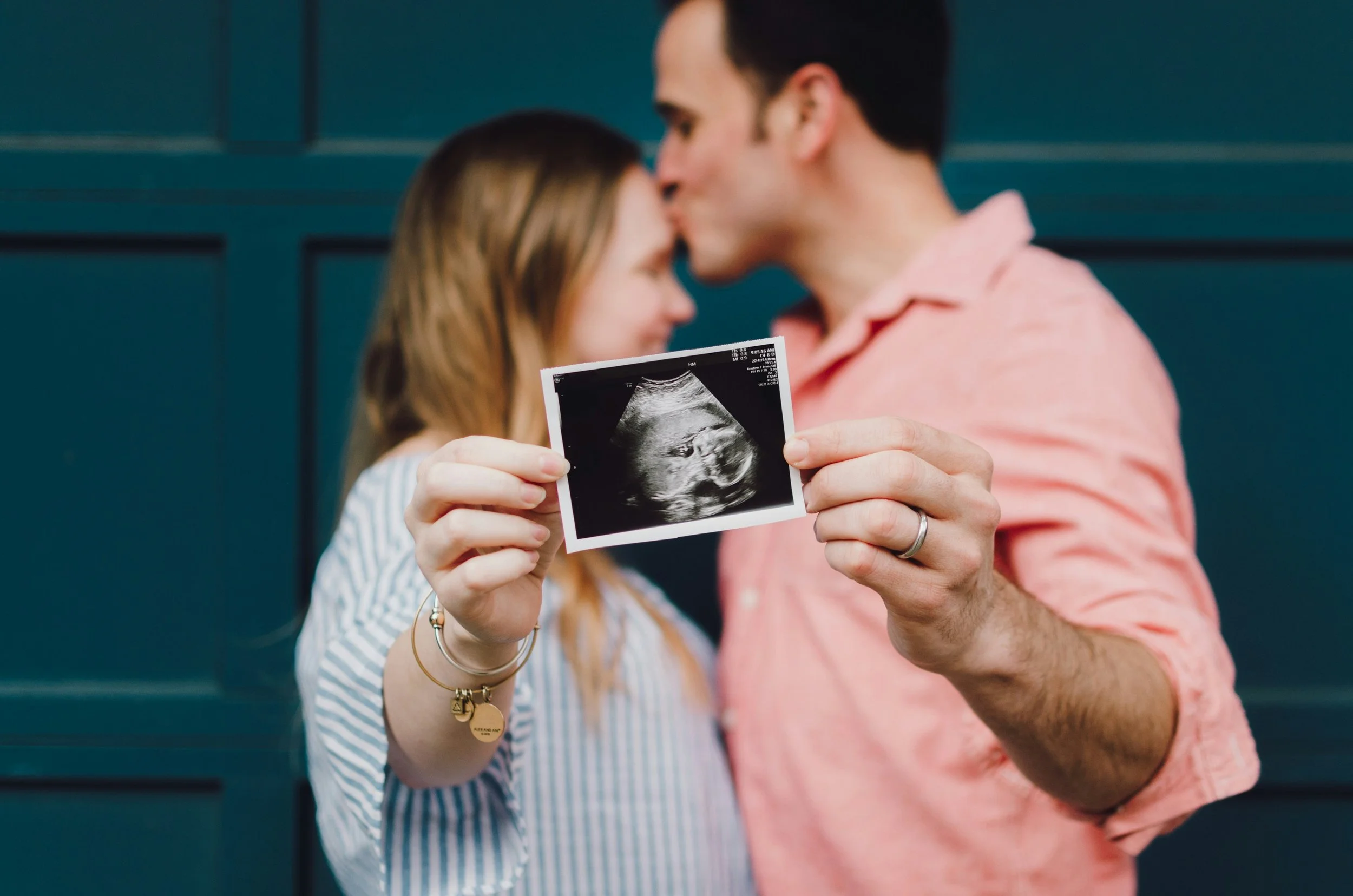
Her name isn't really Maren
I want to start with a story. It's a composite — details changed, a couple of patients blended together — but every beat of it is true to what I see in the treatment room.
Maren came in on a Tuesday in February with a folder. An actual paper folder, three-ring, tabbed. Two years of basal body temperature charts. Bloodwork from three different labs. A note from a reproductive endocrinologist that said, in the flat language of a chart note, unexplained infertility.
She was thirty-four. She'd done four rounds of letrozole. Two IUIs. She and her husband had stopped talking about it at dinner because every conversation ended the same way. She told me she felt like her body was a machine that had a part missing and nobody could tell her which part.
Here's what I noticed in the first twenty minutes, none of which was in the folder: her cycles had shortened from 29 days to 25 over about eighteen months. She woke between 2 and 4 a.m. most nights, wide awake, jaw clenched. She had a week of breast tenderness and irritability before her period that she'd stopped mentioning to anyone because it seemed beside the point. Her hands and feet were cold enough that she wore socks to bed in June. She'd had a bad stretch of nausea and appetite loss during a work crisis the previous spring and never quite got her digestion back.
None of those things are infertility. All of them are information.
We started with acupuncture twice a week and a modified Xiao Chai Hu Tang — a formula from the Shang Han Lun that I reach for constantly in fertility work, because so many women land in exactly that in-between place: alternating symptoms, a hair-trigger stress response, digestion that quit under pressure, a nervous system stuck in the doorway between fight and collapse. Around cycle three we shifted the formula toward Wen Jing Tang as the cold and the luteal phase became the clearer story.
Her cycles lengthened to 27, then 28 days. She started sleeping through the night around week seven, which she mentioned almost as an afterthought and which I thought was the most important thing she'd said all month. Her luteal phase went from ten days to thirteen.
She conceived on her third IUI, six months in.
I'm not going to tell you the herbs did that. I don't know that. What I'll tell you is that she walked into that IUI in a different body than the one that walked into my office in February, and that this is the thing we can actually work on.
We don't treat infertility. We treat the person who has it — and very often, when the person gets better, the fertility follows.
First, the part nobody tells you: this is more common than you think
The World Health Organization released updated global estimates in 2023 and found that “roughly 17.5% of adults — about 1 in 6 people worldwide — experience infertility in their lifetime, with lifetime prevalence of 17.8% in high-income countries and 16.5% in low- and middle-income countries.” As WHO Director-General Dr. Tedros Adhanom Ghebreyesus put it, "The report reveals an important truth: infertility does not discriminate."
If you are in this, you are not an outlier. You are in an enormous, mostly silent group of people who don't talk about it at parties.
📎 Source: WHO, 1 in 6 people globally affected by infertility (2023)
Why do couples struggle to conceive?
Short answer: Roughly a third of cases trace to female factors, a third to male factors, and a third are mixed or unexplained. The most common identifiable causes are ovulatory disorders (including PCOS), tubal or pelvic factors (including endometriosis and adhesions), sperm quality issues, and age-related decline in egg quality.
The categories that come through our door most often:
Ovulatory dysfunction / PCOS:
What’s actually happening: Follicles don't mature or release predictably; insulin resistance and androgen excess disrupt signaling.
What we can influence: Cycle regularity, insulin sensitivity, ovulation rate, stress loadEndometriosis:
What’s actually happening: Inflammatory lesions, adhesions, altered pelvic environment and immune signaling
What we can influence: Pain, inflammation, pelvic blood flow, quality of lifeHypothalamic amenorrhea:
What’s actually happening: The brain switches off reproductive signaling under energy deficit or chronic stress
What we can influence: Nervous system regulation, nourishment, recovery of the HPO axis (slowly)Thyroid & autoimmune conditions:
What’s actually happening: Hypothyroidism, Hashimoto's, elevated antibodies affect ovulation, implantation, miscarriage risk
What we can influence: Support alongside — never instead of — endocrinology careMale factor:
What’s actually happening: Concentration, motility, morphology, DNA fragmentation
What we can influence: Sperm parameters, which turn over roughly every 74 days"Unexplained":
What’s actually happening: Every standard test is normal and it still isn't happening
What we can influence: Usually the richest territory for Chinese medicine, honestly
That last row deserves a paragraph. "Unexplained infertility" doesn't mean nothing is wrong. It means nothing showed up on the tests we currently run. Western reproductive medicine is extraordinarily good at structural and hormonal questions and much less interested in the questions Chinese medicine has been asking for two thousand years: what is the quality of this cycle? What happens to this woman's digestion when she's stressed? Is she warm? Is she sleeping? What is the texture of her fatigue?
Those questions aren't mystical. They're clinical data — data that a diagnostic system built around pattern recognition knows exactly what to do with.
How does acupuncture help fertility?
Short answer: Acupuncture appears to work through several measurable mechanisms — increasing blood flow to the uterus and ovaries, modulating the hypothalamic-pituitary-ovarian axis, dampening sympathetic nervous system overdrive, and reducing the anxiety and cortisol load that independently associate with poorer fertility outcomes. The research on pregnancy and live birth rates is genuinely mixed, and I think you deserve an honest accounting of it.
What the research actually shows
Let me give you both sides, because a practitioner who only shows you the flattering studies is not someone you should trust with your body.
The encouraging findings:
A 2024 systematic review and meta-analysis in Archives of Gynecology and Obstetrics found improved pregnancy outcomes when acupuncture was incorporated into IVF cycles (Xu, Zhu & Zheng, 2024).
A 2025 network meta-analysis in Frontiers in Endocrinology pooled RCTs published through May 2024 and reported that “acupuncture significantly improved clinical pregnancy rate (RR 1.26) and live birth rate (RR 1.10), with the embryo culture period ranking as the most effective treatment timing, followed by ovarian stimulation and ART preparation.” Critically, “longer treatment durations of three months or more and higher session counts of twenty or more produced superior outcomes.” (Full text)
Psychosocial and mind-body interventions during ART have their own literature. A meta-analysis in BMJ Opencovering 39 studies found significant effects on both clinical pregnancy and psychological outcomes, and — this is the part I find fascinating — “meta-regression indicated that larger reductions in anxiety were associated with greater improvement in pregnancy outcomes” (Frederiksen et al., 2015).
The null and negative findings:
The largest trial of acupuncture for PCOS-related infertility, PCOSAct, randomized 1,000 women and was published in JAMA in 2017. It did not find that acupuncture improved live birth rates (Wu et al., 2017).
A 2018 JAMA RCT of acupuncture versus sham during IVF likewise found no significant difference in live births (Smith et al., 2018).
So how do I hold both of those?
Two ways. First: in both of those large negative trials, the acupuncture was delivered as a fixed protocol, in a short window, without pattern differentiation — which is a bit like testing "medication" without specifying which one, for whom, or for how long. Second, and more importantly, the newer research is converging on dose. The 2025 network meta-analysis found benefit concentrated in longer courses and higher session counts. That maps almost exactly onto what happens in a real clinic, where nobody comes in for four sessions the week of transfer and expects a different life.
"Acupuncture isn't a switch you flip on transfer day. It's a three-month conversation with a cycle."
📎 Also worth reading: acupuncture and ovulatory disorders — luteinized unruptured follicle syndrome meta-analysis, Frontiers in Endocrinology (2025)
How Chinese herbal medicine works for fertility
Short answer: Chinese herbal formulas are prescribed to the individual's underlying pattern — not to the diagnosis of "infertility." Two women with identical lab work can receive completely different formulas, and that individualization is the entire point. Herbal medicine is where I see the deepest structural change in a cycle.
The evidence base
A systematic review and meta-analysis of 40 RCTs involving 4,247 women found that “Chinese herbal medicine was associated with a 1.74 times higher probability of achieving pregnancy compared with Western medical drug therapy alone, with mean pregnancy rates of 60% in the herbal group versus 33% in the conventional treatment group — trials that included women with PCOS, endometriosis, anovulation, tubal blockage, and unexplained infertility” (Ried, Complementary Therapies in Medicine, 2015).
I'll add the caveat the authors themselves would: many of these trials come from Chinese-language literature with methodological limitations, and the effect sizes are almost certainly inflated by publication bias. The direction of the evidence is consistent. The magnitude, I'd take with salt.
There's also population-level data. A Taiwanese population-based case-control study published in Evidence-Based Complementary and Alternative Medicine examined 8,766 women with newly diagnosed infertility and found “an overall 48% increase in successful pregnancy among women receiving TCM, with Wen Jing Tang and Dang Gui Shao Yao San among the most commonly prescribed formulas and each showing significant adjusted odds ratios” (Liao et al., 2020).
That's not a randomized trial, and it can't prove causation. But it tells you something real: these particular formulas are not obscure. They're the workhorses of fertility practice across East Asia, prescribed at scale, for a very long time.
The formulas I use most — and why
Almost everything I prescribe traces back to two texts: the Shang Han Lun (Treatise on Cold Damage) and the Jin Gui Yao Lue (Essentials from the Golden Cabinet), both attributed to Zhang Zhongjing around 200 CE. These aren't folk remedies. They're a systematic clinical framework that has been continuously tested, argued over, and refined for eighteen centuries.
Xiao Chai Hu Tang 小柴胡湯 — Minor Bupleurum Decoction(Shang Han Lun) My most-modified formula in fertility practice. It's indicated for the shao yang pattern — the in-between state: alternating chills and heat, fullness under the ribs, irritability, nausea, poor appetite, symptoms that come and go. In modern terms, I'm often reaching for it when someone's stress physiology has hijacked their cycle, when there's a marked premenstrual shift in mood and digestion, or in autoimmune and inflammatory pictures. It's rarely used alone — I combine and modify it constantly. In Japan it's known as Sho-saiko-to (TJ-9) and is one of the most-studied Kampo formulas in existence.
Dang Gui Shao Yao San 當歸芍藥散 — Angelica & Peony Powder(Jin Gui Yao Lue) Blood deficiency with dampness and fluid retention. The picture: pale, tired, dizzy, mild swelling, cramping abdominal pain, heavy limbs, a cycle that feels depleted rather than stagnant. This is the single most-prescribed gynecological formula in Japanese Kampo medicine, where it's called Toki-shakuyaku-san (TJ-23) — Japanese obstetricians have used it for decades, including in pregnancy. There's Kampo research on its use in luteal insufficiency (Usuki et al., American Journal of Chinese Medicine, 2002), and it was the most commonly prescribed formula for female infertility in the Taiwanese national database (Chinese Herbal Products for Female Infertility in Taiwan, 2016).
Wen Jing Tang 溫經湯 — Warm the Menses Decoction(Jin Gui Yao Lue) Zhang Zhongjing's original text names infertility explicitly in the indication — this is a formula written for difficulty conceiving, nearly two thousand years ago. Blood deficiency with cold and stasis: cold hands and feet, lower abdominal cold or aching, dark or scanty menses, dryness, a short or unstable luteal phase. Known as Unkei-to (TJ-106) in Kampo. This is where I moved Maren's formula, and it's where a lot of long-standing "unexplained" cases live.
Zhen Wu Tang 真武湯 — True Warrior Decoction(Shang Han Lun) Yang deficiency with water accumulation: profound fatigue, cold, loose stools, edema, heaviness, dizziness, feeling like you're moving through water. I use this most in thyroid-adjacent presentations and in women who are genuinely depleted rather than merely stressed — and it pairs with medical thyroid management rather than replacing it.
"The formula follows the person. If I'm giving two women the same prescription, one of them is probably getting the wrong one."
An important note on safety: Chinese herbs and fertility medications can interact. If you're taking gonadotropins, letrozole, clomiphene, progesterone, thyroid replacement, or immunosuppressants, your herbalist needs to know, and we typically adjust or pause formulas at specific points in an ART cycle. Never stop a prescribed medication to take herbs. Never take herbs from an unregulated source. Work with someone licensed and credentialed.
What about bodywork and massage?
Short answer: Manual therapy targets the mechanical and fascial side of fertility — pelvic adhesions, post-surgical scar tissue, restricted mobility of the reproductive organs, and chronic pelvic floor tension. The evidence base is much thinner than for acupuncture and herbs, and I'll say that plainly.
Here's what exists. Case series from Wurn and colleagues on site-specific manual soft-tissue therapy reported pregnancies in women with adhesion-related infertility, including women with documented tubal blockage (Wurn et al., MedGenMed, 2004). There's also a controlled animal study in PLOS ONE showing that a modeled manual therapy reduced postoperative adhesion formation (Bove et al., 2017) — which gives a plausible mechanism rather than proof of a clinical outcome.
These are small, uncontrolled, or preclinical studies. Nobody has run the large randomized trial. So here's how I actually think about bodywork in our practice:
For pelvic pain, adhesions, and post-surgical scar tissue — it's a reasonable, low-risk addition with a plausible mechanism
For nervous system down-regulation during a brutal treatment cycle — it's excellent, and this matters more than people give it credit for
For chronic pelvic floor holding, which is extremely common in people who've had years of painful sex, painful periods, or invasive procedures — it's often the missing piece
As a stand-alone fertility treatment — I wouldn't sell it to you that way
Trying to conceive naturally: what a Chinese medicine approach looks like
Short answer: Plan on three months minimum. That's not a sales pitch — it's follicular biology. An egg ovulated this month began its final maturation roughly 90 days ago, and sperm production takes about 74 days. You are always treating the cycle three months from now.
A typical arc looks like:
Months 1–2: mapping. Full intake, pulse and abdominal diagnosis, cycle charting, review of any existing labs. We're building a pattern diagnosis and finding the root cause — not just noting that ovulation is late, but understanding why it's late in this particular person. Acupuncture 1–2× weekly. First herbal formula.
Months 2–4: shifting. The formula changes as the picture changes — often more than once. We track concrete markers: cycle length, luteal phase length, cervical fluid, ovulation timing, PMS, sleep, digestion, basal temperature stability.
Months 4–6: consolidating. By now we either see clear movement in the cycle or we don't. If we don't, that's a data point, and it's when I'll push harder toward further workup or a referral to reproductive endocrinology.
I want to be direct about that last point, because it's an ethical one. Chinese medicine is not a reason to delay a workup.If you're over 35 and have been trying for six months, or under 35 and trying for twelve, get evaluated. If you have significant male factor, tubal blockage, or diminished ovarian reserve, you need reproductive medicine, and I will tell you so.
Supporting IUI and IVF with acupuncture and herbs
Short answer: Yes, these combine well — and most of our ART patients do both. The general strategy is to build the terrain in the months before a cycle, support the body through stimulation and transfer, and coordinate carefully with your fertility clinic on herb timing.
The ideal timeline
3+ months before cycle: This is the highest-value window.
What we focus on: Root-cause herbal treatment, cycle regulation, addressing thyroid/inflammation/insulin resistance, male partner treatment if indicated
Suppression / baseline:
What we focus on: Nervous system regulation, sleep, managing side effects
Stimulation phase:
What we focus on: Blood flow to the ovaries, managing bloating and headaches, supporting response. Herbs usually simplified or paused here — coordinated with your RE
Around retrieval:
What we focus on: Recovery, pain management, reducing OHSS-adjacent discomfort
Transfer window:
What we focus on: Pre- and post-transfer acupuncture; uterine relaxation, calming the sympathetic response
Two-week wait
What we focus on: Honestly? Mostly emotional and physiological steadying. This is a brutal stretch and support during it is not nothing
Between failed cycles
What we focus on: Regrouping, root-cause work, and space to grieve
Note the emphasis: the months before the cycle matter more than the day of transfer. The 2025 network meta-analysis found the strongest results with courses of three months or more and twenty or more sessions — not with a single session on transfer day. If you're planning IVF for the fall, the time to start is now, not the week before.
Herbs during ART: the practical rules
Tell your reproductive endocrinologist you're taking herbs. Always. Bring the ingredient list.
Most practitioners, including me, simplify or pause formulas during stimulation and after transfer.
Some formulas are genuinely contraindicated with specific medications. This is exactly why you want a licensed herbalist rather than a supplement aisle.
If your clinic asks you to stop, stop. We can work around it.
What about complex conditions?
PCOS
Ovulatory dysfunction from PCOS is “the most common cause of anovulatory infertility, accounting for up to 75% of cases.” The acupuncture evidence here is mixed — as noted, PCOSAct didn't show a live birth benefit — but a 2025 meta-analysis of 15 RCTs found that “acupuncture combined with letrozole may be more effective for PCOS than letrozole alone, though the authors rated the evidence quality as low” (Complementary Therapies in Medicine, 2025). A separate 2025 systematic review of 22 studies with 2,315 participants found improvement in menstrual regularity (full text).
In practice, PCOS is where I do the most work on the metabolic root — insulin sensitivity, sleep, inflammation — and where herbs tend to do more heavy lifting than needles alone.
Endometriosis
The pain evidence here is the strongest in the whole field. A multicenter, single-blind, placebo-controlled RCT published in Fertility and Sterility found acupuncture effective for endometriosis-associated pain (Li et al., 2023), and a 2023 systematic review and meta-analysis found “clinically relevant improvements in pelvic pain compared with non-specific acupuncture, with low rates of adverse events” (full text).
Pain relief is not fertility, and I won't conflate them. But endometriosis patients are frequently in a state of chronic inflammatory and nervous-system load that affects everything, and reducing pain is a legitimate goal in its own right.
Hypothalamic amenorrhea
This one requires the most honesty. HA is the body switching off reproduction because it has concluded — usually correctly — that conditions aren't safe. Under-eating, over-exercising, chronic stress, or some combination. Acupuncture and herbs help with the nervous system piece and with recovery, but the primary intervention is nourishment and rest, and any practitioner who tells you otherwise is selling you something. My role in HA is often to support the nervous system in chronic stress, and to work alongside a dietitian.
Thyroid and autoimmune conditions
Subclinical hypothyroidism, elevated TPO antibodies, and autoimmune conditions all affect ovulation, implantation, and miscarriage risk. Chinese medicine complements medical management here; it does not replace it. If your TSH isn't optimized, that's an endocrinology conversation. Where I can help is with the surrounding picture — fatigue, cold, digestion, inflammation, the Zhen Wu Tang and Xiao Chai Hu Tang territory — and with keeping the whole system steadier while medication is titrated.
Male factor
Half of this is about sperm, and men get remarkably little attention in fertility care. A network meta-analysis in Frontiers found that “acupuncture showed significant advantage over placebo for sperm total motility and, along with omega-3 fatty acids, lycopene, CoQ10 and vitamins, for improving sperm concentration and forward motility” (full text). Earlier reviews in Asian Journal of Andrology were more cautious, finding improvements in concentration and progressive motility but substantial heterogeneity and no clear pregnancy-rate effect (Jerng et al., 2014).
Given that spermatogenesis takes about 74 days, a three-month course before a cycle is the logical window. If your partner hasn't had a semen analysis, that is the single cheapest, fastest, most informative test in all of fertility medicine, and it should happen before anyone does anything invasive.
Frequently asked questions
How long before I should expect to see results from acupuncture for fertility? Plan on three months. Egg development takes roughly 90 days from early recruitment to ovulation, and sperm production takes about 74 days, so you're always working on the cycle a season from now. Many people notice sleep, PMS, and cycle regularity shifting within 4–6 weeks, but changes in ovulation and luteal phase usually take two to three full cycles.
How often should I come in? Most fertility patients start at once or twice weekly. Research on ART outcomes suggests better results with 20 or more sessions over three months or more, rather than a handful of sessions timed around transfer.
Can I take Chinese herbs while doing IVF? Often yes, but with coordination. Most practitioners simplify or pause formulas during ovarian stimulation and after embryo transfer, and your reproductive endocrinologist should always know what you're taking. Bring your ingredient list to your clinic.
Does acupuncture hurt? Acupuncture needles are about the diameter of a human hair — nothing like a hypodermic. Most people feel a brief moment of sensation on insertion, then a heavy or warm feeling, then usually fall asleep. Fertility patients often say it's the only hour of the week nobody is asking anything of them.
Is acupuncture safe during IVF and early pregnancy? Yes, when performed by a licensed acupuncturist who knows fertility work. Certain points are avoided in pregnancy, which is a real reason to see someone with specific training rather than a general practitioner.
Will acupuncture work if I have blocked fallopian tubes or severe male factor? Not as a fix for the structural problem. Blocked tubes and severe male factor need reproductive medicine — IVF or ICSI. What we can do is support the terrain around those interventions and improve the parameters that are modifiable.
Can Chinese medicine help with PCOS-related infertility? It can help with cycle regularity, insulin sensitivity, and ovulation, and the evidence for acupuncture combined with ovulation induction medication is promising though low-certainty. Root-cause herbal treatment plus metabolic work is where I see the most durable change.
What if I've been told my infertility is "unexplained"? This is one of the best indications for Chinese medicine, because pattern-based diagnosis picks up information that standard workups don't collect — cycle quality, digestion, sleep, thermoregulation, stress physiology. Unexplained doesn't mean unaddressable.
Do you treat men too? Yes, and we should be treating far more of them. Male factor contributes to roughly half of all cases. A three-month course of acupuncture and herbs before a cycle aligns with the sperm production timeline.
Should I stop my fertility medications to try natural methods? No. Never stop a prescribed medication without talking to the prescribing physician. Chinese medicine works alongside conventional fertility care, not in opposition to it.
Is it too late if I'm over 40? Age is the single strongest predictor of fertility outcomes and no therapy changes that. What we can influence at any age is cycle quality, inflammation, stress load, and how well you tolerate treatment. I'd also encourage anyone over 40 to move quickly on a reproductive endocrinology consult rather than spending months on natural approaches alone.
What should I bring to a first fertility appointment? Any recent bloodwork (AMH, FSH, LH, estradiol, thyroid panel including antibodies, prolactin), semen analysis results, imaging reports, a list of medications and supplements, and if you have them, a few months of cycle tracking data. If you don't have any of that, come anyway.
Key takeaways
1 in 6 people worldwide experience infertility. You're not alone and you're not broken.
Chinese medicine treats the root cause, not the label. Two women with the same diagnosis often get entirely different formulas — that's the point.
The formulas that do the most work in fertility practice come from the Shang Han Lun and Jin Gui Yao Lue: Xiao Chai Hu Tang, Dang Gui Shao Yao San, Wen Jing Tang, Zhen Wu Tang — modified to the individual.
Dose and duration matter more than timing. Three months and 20+ sessions beats four sessions around transfer day.
This works alongside ART, not instead of it. Most of our IVF and IUI patients use both, and the best window is the three months before a cycle starts.
The evidence is real but mixed. Anyone who tells you it's conclusive in either direction hasn't read it.
Don't delay a workup. Over 35 and trying six months, or under 35 and trying twelve — get evaluated.